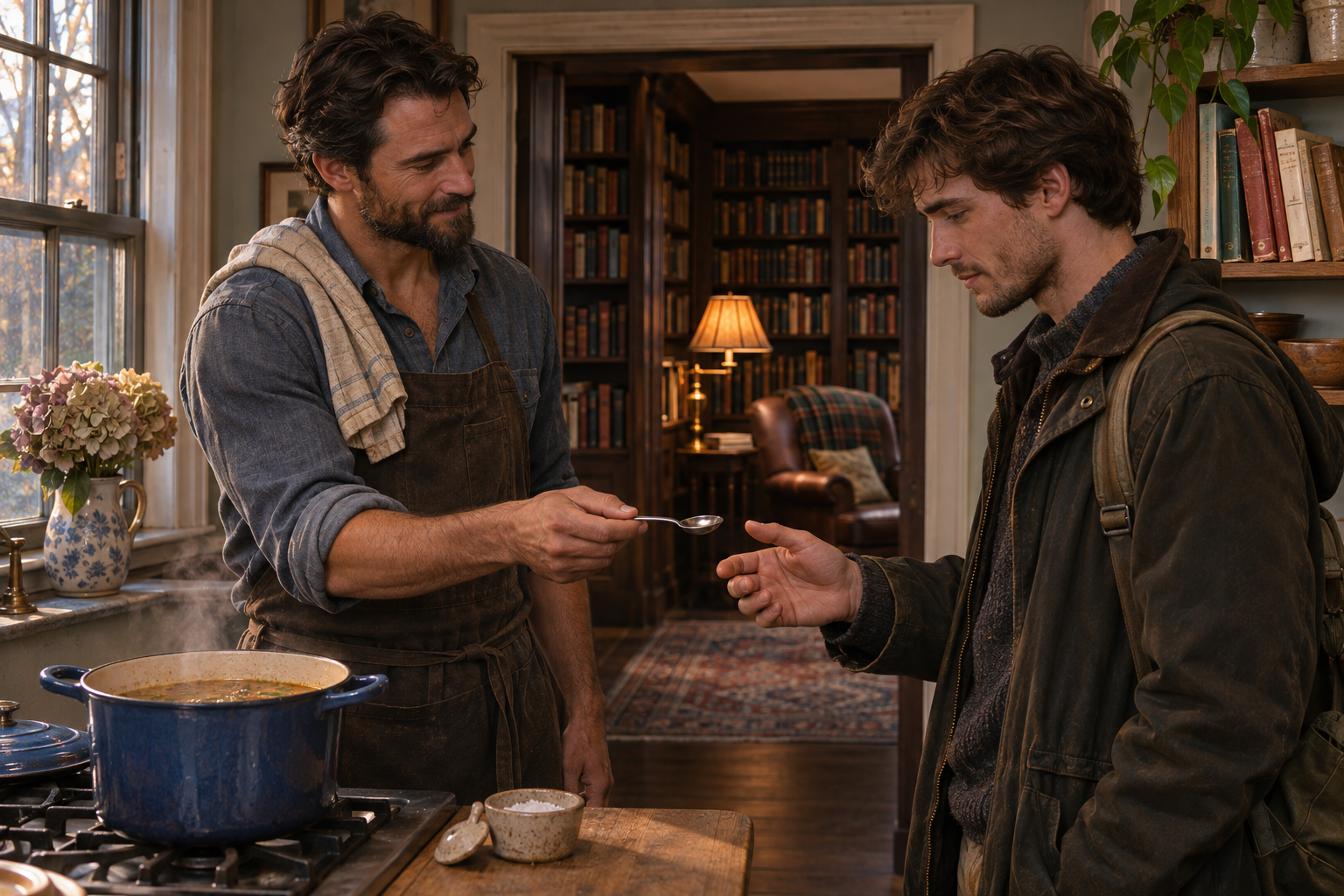
The first thing Ben and his younger brother agreed on in six years was that the soup needed salt.
On the drive to their mother’s house, Micah had practiced an apology. He could get through the first sentence just fine: I left too much of it to you. The trouble came in the second sentence, somewhere around the word because. By the time he turned into the driveway, he had explained himself half a dozen times to an empty passenger seat.
He found Ben in the kitchen, lifting the lid off their mother’s blue pot. Micah still had his coat on.
“Can I do anything?”
Ben opened a drawer and handed him a spoon. “Here. Tell me what you think.”
Micah tasted the soup. “A little salt.”
“That’s what I thought.”
What moves me about these two imagined brothers is how much easier it was to keep talking once they were standing side by side. A minute earlier, Micah had been at the kitchen door, trying to fit six years into an opening sentence. Now he was close enough to say one thing plainly and stay to hear what his brother had to say.
Paul writes, “If possible, so far as it depends on you, be at peace with all men” (Romans 12:18, NASB 1995). I find mercy in those words so far as it depends on you. I can name the harm I caused. I can give someone time to tell me what it cost them. How they receive my apology belongs to them.
Ben stirred the salt into the soup. This time, Micah knew where to stop.
“I told you I’d take Mom to her appointments on Thursdays. I took her once. I’m sorry, Ben.”
Ben turned the heat down. “Thursdays were hard.”
Micah took off his coat and hung it over the back of a kitchen chair.
“Tell me.”
Leave a Reply