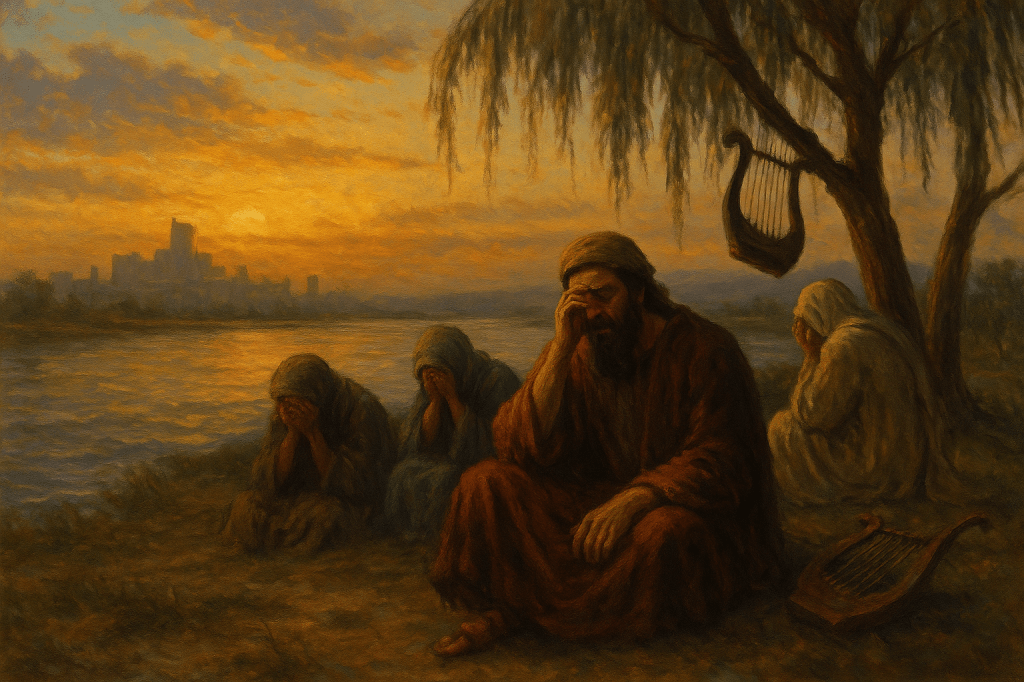
“By the rivers of Babylon,
There we sat down and wept,
When we remembered Zion.
Upon the willows in the midst of it
We hung our harps.”
“For there our captors demanded of us songs,
And our tormentors, amusement, saying,
‘Sing us one of the songs of Zion!’”
“How can we sing the Lord’s song
In a foreign land?
If I forget you, Jerusalem,
May my right hand forget its skill.
May my tongue cling to the roof of my mouth
If I do not remember you,
If I do not exalt Jerusalem
Above my chief joy.”
“Remember, Lord, against the sons of Edom
The day of Jerusalem,
Those who said, ‘Lay it bare! Lay it bare
To its foundation!’”
“Daughter of Babylon, you devastated one,
Blessed will be one who repays you
With the retribution with which you have repaid us.
Blessed will be one who seizes and dashes your children
Against the rock.”
Context and Meaning
Psalm 137 is one of the most emotionally charged psalms in Scripture. Written during the Babylonian exile, it captures the deep sorrow, longing, and righteous anger of God’s people who were torn from their homeland and temple worship.
The psalm expresses three key emotions:
- Grief over the loss of Jerusalem,
- Loyalty to God’s holy city, and
- A cry for justice against Babylon and Edom, who rejoiced at Jerusalem’s destruction.
This psalm holds the tension between deep lament and a fierce desire for God’s justice to prevail.
Key Themes:
- Exile and Grief: God’s people weep as they remember Zion (v. 1–2).
- Mockery of the Captors: The Babylonians demand songs of joy from a people in sorrow (v. 3).
- Faithfulness to Jerusalem: The psalmist vows never to forget God’s holy city (v. 4–6).
- Cry for Justice: A plea for God to remember the wrongs of Edom and Babylon (v. 7–9).
- Righteous Indignation: The psalm ends with a strong expression of retributive justice—desiring God’s judgment, not personal revenge.
Reflection and Impact
Psalm 137 teaches us about lament, loyalty, and longing for divine justice:
- Grief is sacred when directed to God – “We sat down and wept when we remembered Zion” (v. 1) reflects Matthew 5:4: blessed are those who mourn, for they will be comforted.
- The world mocks the faith of the suffering – “Sing us one of the songs of Zion” (v. 3) recalls 1 Peter 4:4: they are surprised when you do not join them.
- Faith clings to hope in loss – “If I forget you, Jerusalem” (v. 5) echoes Hebrews 11:16: they long for a better country—a heavenly one.
- God remembers injustice – “Remember, Lord, against Edom” (v. 7) connects to Nahum 1:2: the Lord takes vengeance on His adversaries.
- Righteous anger seeks God’s justice, not human vengeance – “Blessed is he who repays you” (v. 8–9) foreshadows Revelation 18:6: God repays Babylon double for her deeds.
Application
- Bring Your Grief to God: It’s holy to lament before Him in seasons of loss.
- Stay Loyal in Exile: Never forget God’s promises, even in foreign or hostile places.
- Hope in God’s Justice: Trust Him to remember and judge rightly.
- Guard Against Bitterness: Let righteous anger lead to prayer, not personal vengeance.
- Keep Longing for Zion: Fix your heart on the eternal Jerusalem—the city of God.
Closing Thought
Psalm 137 is a raw song of sorrow and faith. In exile and heartbreak, God’s people wept but did not forget Him. Their lament became a testimony of longing for the justice and restoration that only He can bring.
“If I forget you, O Jerusalem, may my right hand forget its skill.”


 TIME FOR PROVIDENCE
Leave a comment